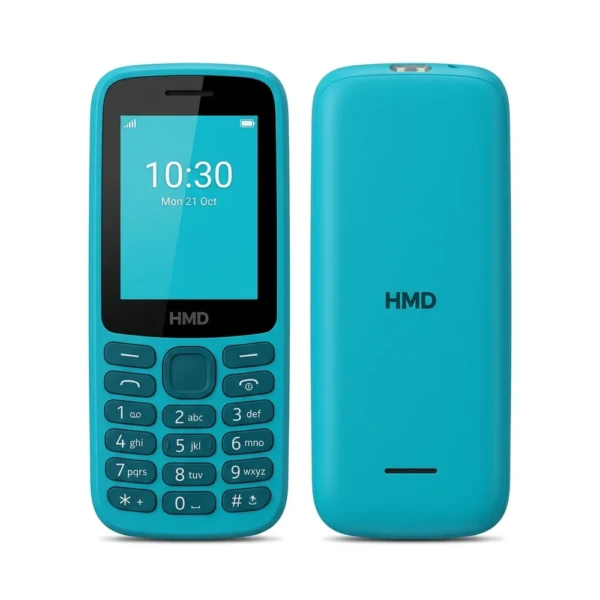
Polycarbonate shell with solid inner frame, tactile island physical keypad
SIMsSIM (Subscriber Identity Module) is a small card that contains mobile network subscriber's account information. This allows the phone using the card to attach to a mobile network. The SIM card is most commonly associated with GSM and UMTS mobile networks. Moving a SIM card from one phone to another allows a subscriber to switch mobile phones without having to contact their mobile network carrier. SIM cards can also be used by a phone to store limited amounts of data, such as phone numbers and text messages.
Dual SIM (Nano-SIM, dual stand-by)
Water Resistant
IP54 dust protected and water splash resistant
Display 4 of 4 specified
Display: 4 of 4 specifications specified
Display TypeDisplay Technology => A number of display technologies and types used in mobile phones => TFT (Thin Film Transistor), IPS (In-Place Switching), OLED (Organic Light Emitting Diode), AMOLED (Active-Matrix Organic Light-Emitting Diode), Super AMOLED (an even advanced version of AMOLED), Resistive Touchscreen (Resistive touchscreens contain two layer of conductive material with a very small gap between them which acts as a resistance), Capacitive Touchsceen (Capacitive touchscreen technology consists of a layer of glass coated with a transparent conductor)
ProtectionDisplay Protection => Gorilla Glass is a special alkali-aluminosilicate glass shield with exceptional damage resistance that helps protect mobile displays from scratches, drops, and bumps of everyday use, It is always better to go for a smartphone with Gorilla Glass for that added protection and peace of mind.
Scratch-resistant lens cover
PLATFORM 4 of 4 specified
PLATFORM: 4 of 4 specifications specified
Operating SystemOS => Every computer system run on a base software called Operating System (OS). Operating System controls all basic operations of the computer (such as smartphone, PDAs, tablet computers and other handheld devices). The Operating System allows the user to install and run third party applications (apps), apps are used to add new functionality to the device.
S30+ Feature Phone OS (Zoomed menus & Readout accessibility)
ChipsetChipset is a group of integrated circuits designed to perform one or a more dedicated functions, often with real time computing constraints, Popular smartphones are equipped with more advanced embedded chipsets that can do many different tasks depending on their programming.
Unisoc T127
CPUCPU (Central Processing Unit) mostly known as processors, CPU processes instructions in order to carry out certain functions that make your device operate properly. Processors are often described as the brain of computers, smartphones and tablets, Smartphones and tablets rely on processors to carry out their every task, Processors are an incredibly important factor in selecting any type of computing device, including your smartphone.
Single-core 4G feature processor
GPUGPU (Graphics Processing Unit) is a single-chip processor designed to rapidly manipulate and alter memory to accelerate the creation of images in a frame buffer intended for output to a display, This includes things such as lighting effects, object transformations, and 3D motion.
Integrated 2D display controller
MEMORY 2 of 2 specified
MEMORY: 2 of 2 specifications specified
Card SlotMemory Card Slot is a special slot for inserting a memory card. Memory cards allow you to expand the phone's built-in memory, A memory card (sometimes called a flash memory card or a storage card) is a small storage medium used to store data such as text, pictures, audio, and video, for use on small, portable or remote computing devices such as mobile phones, mp3 players, digital cameras.
microSDHC (dedicated slot, up to 32GB)
Internal
128MB 64MB RAM
MAIN CAMERA 3 of 3 specified
MAIN CAMERA: 3 of 3 specifications specified
Cameras SpecsToday’s smartphones come equipped with a very comprehensive set of camera related specifications. Our smartphone, for many of us, has become our primary camera due to it being the one we always have with us.
No rear camera (classroom & workplace distraction-free design)
Camera Features
None
Video
No
SELFIE CAMERA 3 of 3 specified
SELFIE CAMERA: 3 of 3 specifications specified
Cameras SpecsToday’s smartphones come equipped with a very comprehensive set of camera related specifications. Our smartphone, for many of us, has become our primary camera due to it being the one we always have with us.
No front camera
Features
None
Video
No
SOUND 2 of 2 specified
SOUND: 2 of 2 specifications specified
Loudspeaker
Yes
3.5mm jack
Yes
COMMS 6 of 7 specified
COMMS: 6 of 7 specifications specified
WLAN
No
BluetoothBluetooth is a wireless communications technology for exchanging data between mobile phones, headsets, computers and other network devices over short distances without wires, Bluetooth technology was primarily designed to support simple wireless networking of personal consumer devices.
5.0
Positioning
No
NFCNFC (Near field communication) is a set of standards for smartphones and similar devices to establish peer-to-peer radio communications with each other by touching them together or bringing them into proximity, usually no more than a few inches.
No
InfraredInfrared connectivity is an old wireless technology used to connect two electronic devices. It uses a beam of infrared light to transmit information and so requires direct line of sight and operates only at close range.
–Not specified
Radio
Wireless & wired FM radio
USB
USB Type-C 2.0
Features 1 of 1 specified
Features: 1 of 1 specifications specified
SensorsSensors are electronic components that detects and responds to some type of input from the physical environment. The specific input could be light, heat, motion, moisture, pressure and location, The output is generally a signal that is converted to use in computing systems, a location sensor, such as a GPS receiver is able to detect current location of your electronic device.
Battery TypeBattery Type => Cell phones run on various kinds of batteries depending on the manufacturer, phone size or shape and features. There are basically four types of cell phone batteries => Lithium Polymer, Lithium Ion, Nickel Metal Hydride and Nickel Cadmium.
Li-Ion, removable
CapacityBattery Capacity is a measure (typically in Amp-hr) of the charge stored by the battery, and is determined by the mass of active material contained in the battery. The battery capacity represents the maximum amount of energy that can be extracted from the battery under certain conditions.
1450 mAh
Placement
–Not specified
ChargingThe functionality responsible for recharging batteries in portable devices, such as mobile phones, significantly influences both battery lifespan and the practicality of daily product usage.The charging process, encompassing factors like voltage, current, and completion actions, is contingent upon the battery's size and type.Contemporary battery chargers dynamically adjust charging parameters based on the battery's current charging state. Charging an empty battery poses no safety risk, allowing for a quicker charging process. Consequently, many charging speed benchmarks, including ours, specify the battery level achieved after a 30-minute session on an empty battery.Standard chargers with a power output of 5V/1A, equivalent to 5W, serve as a baseline, with anything surpassing this speed classified as quick or fast charging.
Wired USB-C charging
MISC 3 of 5 specified
MISC: 3 of 5 specifications specified
Colors
Black, Cyan, Pink
Model
TA-1645 / School Edition
SARSAR (Specific absorption rate): Each GSM handset has a radio transmitter and receiver in order to operate in the wireless GSM network. That transceiver is manufactured so that when used next to the ear and when worn on the belt, it won't exceed the limits for exposure to radio frequency energy set by the authorities.The authorities in question here are the Federal Communications Commission (FCC) of the U.S. Government, Industry Canada of the Canadian Government (IC), and the Council of the European Union.
–Not specified
SAR EUEach GSM handset has a radio transmitter and receiver in order to operate in the wireless GSM network. That transceiver is manufactured so that when used next to the ear and when worn on the belt, it won't exceed the limits for exposure to radio frequency energy set by the authorities.The authorities in question here are the Federal Communications Commission (FCC) of the U.S. Government, Industry Canada of the Canadian Government (IC), and the Council of the European Union.
–Not specified
Price
$18.00 / €19.00 / PKR 4,999
TESTS 3 of 4 specified
TESTS: 3 of 4 specifications specified
Performance
Instantaneous S30+ 4G VoLTE keypad operation
Display
2.4-inch QVGA sunlit readable TFT
Loudspeaker
–Not specified
Battery (new)
Multi-day standby & extended 4G HD talk time
Lab & Spec Evaluation
Our Rating
The overall rating is based on review by our experts
✓Distraction-free, camera-free 4G VoLTE student and backup feature phone with crystal-clear HD voice calling and tough inner metal chassis
✓Removable 1,450 mAh battery charged via modern USB Type-C delivers many days of standby on a single charge
✓IP54 dust and splash resistance paired with dual LED flashlight, wireless/wired FM radio, MP3 player, Bluetooth 5.0, and classic Snake
✓Ultra-accessible ~$18 price with zoomed accessibility menus and text-to-speech Readout support
✕Reasons to Avoid (Cons)
✕No camera, no Wi-Fi, and no smartphone messaging apps (WhatsApp/YouTube) — strictly built for calls and SMS
✕Small 2.4-inch QVGA TFT screen and basic S30+ OS
✕128MB internal storage requires a microSD card (up to 32GB) for storing MP3 audio files
The HMD 105 4G (School Edition) is a HMD smartphone that pairs a 2.4 inches, 17.8 cm2 (~28.0% screen-to-body ratio) (TFT LCD, 65K colors) display with the Unisoc T127 processor. Announced in 2026, November (School Edition Rollout) (Available. Released 2026, November), the device is positioned for buyers looking for a competitive option around 18.
Design and Display
On the outside, the HMD 105 4G (School Edition) measures 126.07 x 50.5 x 13.9 mm (4.96 x 1.99 x 0.55 in) and weighs 93 g (3.28 oz), featuring a Polycarbonate shell with solid inner frame, tactile island physical keypad construction. The front is built around a 2.4 inches, 17.8 cm2 (~28.0% screen-to-body ratio) TFT LCD, 65K colors panel with a resolution of 240 x 320 pixels, 4:3 ratio (~167 ppi density), giving users sharp text rendering and smooth scrolling for everyday browsing and media playback.
Performance, Software, and Memory
Powering the HMD 105 4G (School Edition) is the Unisoc T127 SoC (Single-core 4G feature processor) paired with the Integrated 2D display controller GPU. Memory configurations include 128MB 64MB RAM (Card slot: microSDHC (dedicated slot, up to 32GB)). Out of the box, the phone runs S30+ Feature Phone OS (Zoomed menus & Readout accessibility).
Camera Configuration
For photography, the rear camera setup consists of: No rear camera (classroom & workplace distraction-free design). Video capture on the main system supports No. On the front, selfie duties and video calls are handled by a No front camera camera.
Battery Life, Charging, and Connectivity
Battery capacity is rated at 1450 mAh (Li-Ion, removable), with charging support rated at Wired USB-C charging. Connectivity options include Wi-Fi (No) and USB Type-C 2.0.
What processor and storage options does the HMD 105 4G (School Edition) have?
The HMD 105 4G (School Edition) is powered by the Unisoc T127 chipset with an Single-core 4G feature processor CPU and Integrated 2D display controller GPU. Memory and storage configurations include 128MB 64MB RAM.
What is the battery capacity and charging speed of the HMD 105 4G (School Edition)?
The HMD 105 4G (School Edition) comes with a 1450 mAh battery (Li-Ion, removable) and supports Wired USB-C charging.
How good is the HMD 105 4G (School Edition) camera setup?
On the rear, the HMD 105 4G (School Edition) features No rear camera (classroom & workplace distraction-free design). It supports video recording at No. For selfies, it includes a No front camera front camera.
Does the HMD 105 4G (School Edition) support 5G, NFC, and a headphone jack?
Network connectivity on the HMD 105 4G (School Edition) includes HSPA, LTE. NFC support: No. 3.5mm headphone jack: Yes.
What is the price and release status of the HMD 105 4G (School Edition)?
The estimated retail price of the HMD 105 4G (School Edition) is around $18. Market status: Available. Released 2026, November. Available colorways include Black, Cyan, Pink.
Reviews
Disclaimer Note
We strive to maintain accurate and up-to-date content on our website for general information purposes only. Please refrain from using the material for business, legal, or any other decisions.



 Editorial score 9.8 out of 10
ZTE nubia RedMagic 12 Pro+
 Editorial score 9.8 out of 10
ZTE nubia RedMagic 12 Pro
 Editorial score 9.8 out of 10
Samsung W27
 Editorial score 9.8 out of 10
Oppo Reno17 Pro 5G
 Editorial score 9.8 out of 10
Oppo Reno16 Pro 5G
 Editorial score 9.8 out of 10
Huawei Pura X View