SIMsSIM (Subscriber Identity Module) is a small card that contains mobile network subscriber's account information. This allows the phone using the card to attach to a mobile network. The SIM card is most commonly associated with GSM and UMTS mobile networks. Moving a SIM card from one phone to another allows a subscriber to switch mobile phones without having to contact their mobile network carrier. SIM cards can also be used by a phone to store limited amounts of data, such as phone numbers and text messages.
–Not specified
Water Resistant
–Not specified
Display 2 of 4 specified
Display: 2 of 4 specifications specified
Display TypeDisplay Technology => A number of display technologies and types used in mobile phones => TFT (Thin Film Transistor), IPS (In-Place Switching), OLED (Organic Light Emitting Diode), AMOLED (Active-Matrix Organic Light-Emitting Diode), Super AMOLED (an even advanced version of AMOLED), Resistive Touchscreen (Resistive touchscreens contain two layer of conductive material with a very small gap between them which acts as a resistance), Capacitive Touchsceen (Capacitive touchscreen technology consists of a layer of glass coated with a transparent conductor)
TFT-LCD (WRGB)
Size
3.2 inches
Resolution
–Not specified
ProtectionDisplay Protection => Gorilla Glass is a special alkali-aluminosilicate glass shield with exceptional damage resistance that helps protect mobile displays from scratches, drops, and bumps of everyday use, It is always better to go for a smartphone with Gorilla Glass for that added protection and peace of mind.
–Not specified
PLATFORM 0 of 4 specified
PLATFORM: 0 of 4 specifications specified
Operating SystemOS => Every computer system run on a base software called Operating System (OS). Operating System controls all basic operations of the computer (such as smartphone, PDAs, tablet computers and other handheld devices). The Operating System allows the user to install and run third party applications (apps), apps are used to add new functionality to the device.
–Not specified
ChipsetChipset is a group of integrated circuits designed to perform one or a more dedicated functions, often with real time computing constraints, Popular smartphones are equipped with more advanced embedded chipsets that can do many different tasks depending on their programming.
–Not specified
CPUCPU (Central Processing Unit) mostly known as processors, CPU processes instructions in order to carry out certain functions that make your device operate properly. Processors are often described as the brain of computers, smartphones and tablets, Smartphones and tablets rely on processors to carry out their every task, Processors are an incredibly important factor in selecting any type of computing device, including your smartphone.
–Not specified
GPUGPU (Graphics Processing Unit) is a single-chip processor designed to rapidly manipulate and alter memory to accelerate the creation of images in a frame buffer intended for output to a display, This includes things such as lighting effects, object transformations, and 3D motion.
–Not specified
MEMORY 0 of 2 specified
MEMORY: 0 of 2 specifications specified
Card SlotMemory Card Slot is a special slot for inserting a memory card. Memory cards allow you to expand the phone's built-in memory, A memory card (sometimes called a flash memory card or a storage card) is a small storage medium used to store data such as text, pictures, audio, and video, for use on small, portable or remote computing devices such as mobile phones, mp3 players, digital cameras.
–Not specified
Internal
–Not specified
MAIN CAMERA 1 of 3 specified
MAIN CAMERA: 1 of 3 specifications specified
Cameras SpecsToday’s smartphones come equipped with a very comprehensive set of camera related specifications. Our smartphone, for many of us, has become our primary camera due to it being the one we always have with us.
36.3 Megapixels
Camera Features
–Not specified
Video
–Not specified
SELFIE CAMERA 0 of 3 specified
SELFIE CAMERA: 0 of 3 specifications specified
Cameras SpecsToday’s smartphones come equipped with a very comprehensive set of camera related specifications. Our smartphone, for many of us, has become our primary camera due to it being the one we always have with us.
–Not specified
Features
–Not specified
Video
–Not specified
SOUND 0 of 2 specified
SOUND: 0 of 2 specifications specified
Loudspeaker
–Not specified
3.5mm jack
–Not specified
COMMS 3 of 7 specified
COMMS: 3 of 7 specifications specified
WLAN
–Not specified
BluetoothBluetooth is a wireless communications technology for exchanging data between mobile phones, headsets, computers and other network devices over short distances without wires, Bluetooth technology was primarily designed to support simple wireless networking of personal consumer devices.
–Not specified
Positioning
–Not specified
NFCNFC (Near field communication) is a set of standards for smartphones and similar devices to establish peer-to-peer radio communications with each other by touching them together or bringing them into proximity, usually no more than a few inches.
No
InfraredInfrared connectivity is an old wireless technology used to connect two electronic devices. It uses a beam of infrared light to transmit information and so requires direct line of sight and operates only at close range.
No
Radio
–Not specified
USB
USB 3.0 (5 GBit/sec)
Features 0 of 1 specified
Features: 0 of 1 specifications specified
SensorsSensors are electronic components that detects and responds to some type of input from the physical environment. The specific input could be light, heat, motion, moisture, pressure and location, The output is generally a signal that is converted to use in computing systems, a location sensor, such as a GPS receiver is able to detect current location of your electronic device.
–Not specified
BATTERY 0 of 4 specified
BATTERY: 0 of 4 specifications specified
Battery TypeBattery Type => Cell phones run on various kinds of batteries depending on the manufacturer, phone size or shape and features. There are basically four types of cell phone batteries => Lithium Polymer, Lithium Ion, Nickel Metal Hydride and Nickel Cadmium.
–Not specified
CapacityBattery Capacity is a measure (typically in Amp-hr) of the charge stored by the battery, and is determined by the mass of active material contained in the battery. The battery capacity represents the maximum amount of energy that can be extracted from the battery under certain conditions.
–Not specified
Placement
–Not specified
ChargingThe functionality responsible for recharging batteries in portable devices, such as mobile phones, significantly influences both battery lifespan and the practicality of daily product usage.The charging process, encompassing factors like voltage, current, and completion actions, is contingent upon the battery's size and type.Contemporary battery chargers dynamically adjust charging parameters based on the battery's current charging state. Charging an empty battery poses no safety risk, allowing for a quicker charging process. Consequently, many charging speed benchmarks, including ours, specify the battery level achieved after a 30-minute session on an empty battery.Standard chargers with a power output of 5V/1A, equivalent to 5W, serve as a baseline, with anything surpassing this speed classified as quick or fast charging.
–Not specified
MISC 2 of 5 specified
MISC: 2 of 5 specifications specified
Colors
–Not specified
Model
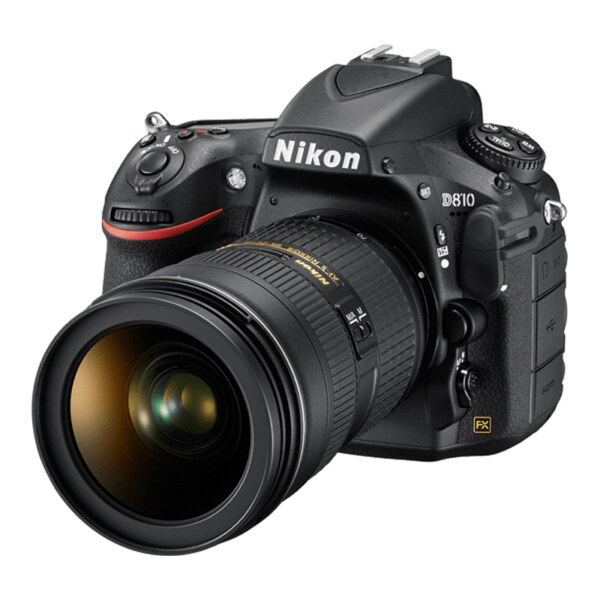
Nikon D810 DSLR Camera
SARSAR (Specific absorption rate): Each GSM handset has a radio transmitter and receiver in order to operate in the wireless GSM network. That transceiver is manufactured so that when used next to the ear and when worn on the belt, it won't exceed the limits for exposure to radio frequency energy set by the authorities.The authorities in question here are the Federal Communications Commission (FCC) of the U.S. Government, Industry Canada of the Canadian Government (IC), and the Council of the European Union.
–Not specified
SAR EUEach GSM handset has a radio transmitter and receiver in order to operate in the wireless GSM network. That transceiver is manufactured so that when used next to the ear and when worn on the belt, it won't exceed the limits for exposure to radio frequency energy set by the authorities.The authorities in question here are the Federal Communications Commission (FCC) of the U.S. Government, Industry Canada of the Canadian Government (IC), and the Council of the European Union.
–Not specified
Price
$1,200.00
TESTS 0 of 4 specified
TESTS: 0 of 4 specifications specified
Performance
–Not specified
Display
–Not specified
Loudspeaker
–Not specified
Battery (new)
–Not specified
Lab & Spec Evaluation
Our Rating
The overall rating is based on review by our experts
The D810 performs with astounding speed and precision. Capture 5 fps at full resolution and in 5:4 crop mode, 6 fps in 1:2 crop mode and 7 fps in DX-crop mode*. Enjoy tack-sharp focus—crucial in high-resolution images—thanks to an Advanced Multi-CAM 3500FX AF sensor that uses 51 focus points, including 15 cross-type sensors, 11 of which work all the way to f/8, plus a new Group Area AF. Internal vibration has been nearly eliminated with a newly designed sequencer mechanism and Electronic Front Curtain Shutter system. You can even quickly spot-check your focus by zooming in 46x on the large 3.2-inch 1,229k-dot display with RGBW alignment and monitor highlights during video capture with zebra striping right in the display. The D810 is as nimble as it is precise.
A deeper grip ensures stable handling, even for small hands. A brighter viewfinder offers ~100% frame coverage, 0.7x magnification and high contrast organic EL information display for easier visibility. The scratch- and shock-resistant TFT LCD display has wide viewing angles and enhanced visibility in sunlight. Its color can be calibrated to match an external monitor, and a new split-screen feature lets you monitor two different points of a scene side-by-side to ensure proper leveling or focus.
The D810 is a versatile camera for versatile shooters. Produce stunning star-trail images with unlimited continuous shooting—capture images for as long as your battery or memory card will allow. Create smooth, even time-lapse sequences thanks to new Exposure Smoothing. Preserve details in both the shadowy and bright areas of stage performances and other spot-lit situations with Highlight-weighted Metering. Use the D810’s pop-up flash as a Commander for Nikon’s Creative Light System—a major convenience for location photographers. Save your files in a new 12-bit uncompressed RAW size S* format that’s half the size of RAW size L. Wherever your passion and inspiration takes you, the D810 will follow.
Every superb NIKKOR lens tells a new story, from fast primes to versatile telephoto zooms. With optional Nikon Speedlights, lighting is as powerful and comprehensive as you want it to be, while pro-grade Wi-Fi® transmitters and remote controls streamline workflow in the studio or at a remote location. Draw the most from RAW files with the new Capture NX-D software, or tailor your images and customize your picture control settings with the optional Picture Control Utility 2. Unleash the full potential of the D810.
Nikon’s EXPEED image processing concept enables superior performance in Nikon cameras. The new EXPEED 4 design takes that performance even further—30% faster than its predecessor, 25% faster frame rates (5 fps), a wider ISO range of 64-12,800 with low noise throughout, smooth gradations, a wide dynamic range, optimizations for 1080 60p video, greater energy efficiency and more.
Nikon D810 DSLR Camera — Frequently Asked Questions
How good is the Nikon D810 DSLR Camera camera setup?
On the rear, the Nikon D810 DSLR Camera features 36.3 Megapixels.
What is the price and release status of the Nikon D810 DSLR Camera?
The estimated retail price of the Nikon D810 DSLR Camera is around $1,200. Market status: Available. Released 2023, July.
We strive to maintain accurate and up-to-date content on our website for general information purposes only. Please refrain from using the material for business, legal, or any other decisions.