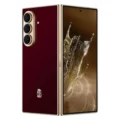
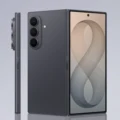
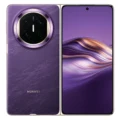
Samsung Galaxy Z Fold8 Ultra vs Huawei Mate X8
Read our full comparison: Huawei Mate X8 vs Samsung Galaxy Z Fold8 Ultra
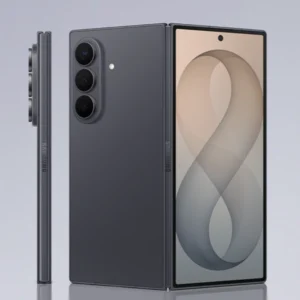
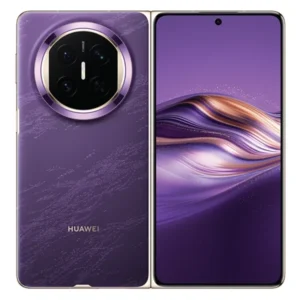

Key differences
Taken from the specification table below. No scores or winners: only the stored values.
| Spec | Samsung Galaxy Z Fold8 Ultra | Huawei Mate X8 |
|---|---|---|
| Chipset | Qualcomm SM8850-AC Snapdragon 8 Elite Gen 5 for Galaxy (3 nm) | HiSilicon Kirin 9050 Pro (Logic Folding Tau) |
| Display size | 8.0 inches, 205.8 cm2 (~91.4% screen-to-body ratio) | 8.2 inches, 212.5 cm2 (~93.0% screen-to-body ratio unfolded) |
| Main camera | 200 MP, f/1.7, 24mm (wide), 1/1.3", multi-directional PDAF, OIS | 50 MP, f/1.4-4.0 (variable aperture), 1/1.28" LOFIC, RYYB (wide), PDAF, OIS |
| Battery | 5000 mAh | 6200 mAh Difference: 1200 mAh |
| Charging | 45W wired (65% in 30 min), 20W wireless (Qi2 Ready), 4.5W reverse wireless | 66W wired SuperCharge, 50W wireless SuperCharge, 7.5W reverse wireless |
| Weight | 219 g (7.72 oz) | 222 g (7.83 oz; varies 217g–235g by brocade/glass finish) Difference: 3 g |
Network
| 2G Network GSM 850 / 900 / 1800 / 1900 - SIM 1 & SIM 2 (dual-SIM) CDMA 800 / 1900 | GSM 850 / 900 / 1800 / 1900 - SIM 1 & SIM 2 GSM 850 / 900 / 1800 / 1900 - SIM 1 & SIM 2 — |
| 3G Network | HSDPA 850 / 900 / 1700(AWS) / 1900 / 2100 HSDPA 850 / 900 / 1700(AWS) / 1900 / 2100 — |
| 4G Network Differs | 1, 2, 3, 4, 5, 7, 8, 12, 13, 17, 18, 19, 20, 25, 26, 28, 32, 38, 39, 40, 41, 66 1, 2, 3, 4, 5, 7, 8, 12, 17, 18, 19, 20, 26, 28, 34, 38, 39, 40, 41 — |
| 5G Network Differs | 1, 2, 3, 5, 7, 8, 12, 20, 25, 26, 28, 38, 40, 41, 66, 77, 78, 257, 260, 261 SA/NSA/Sub6/mmWave 1, 3, 5, 8, 28, 38, 41, 77, 78, 79 SA/NSA — |
| Speed Differs | HSPA, LTE (CA), 5G HSPA, LTE, 5G, Tiantong & BeiDou Satellite — |
LAUNCH
| Announced Differs | 2026, July 15 2026, November 24 — |
| Status Differs | Available. Released 2026, July 22 Available. Released 2026, November 24 — |
BODY
| Dimensions Differs | Unfolded: 158.4 x 143.2 x 4.2 mm | Folded: 158.4 x 75.2 x 8.9 mm Unfolded: 156.8 x 145.6 x 4.2 mm | Folded: 156.8 x 74.0 x 8.9 mm — |
| Weight Differs | 219 g (7.72 oz) 222 g (7.83 oz; varies 217g–235g by brocade/glass finish) — |
| Build Differs | Glass front (Corning Gorilla Armor 2), Ultra Thin Glass (unfolded), Gorilla Glass Victus 2 back, Grade 5 Titanium frame Triple-layer high-strength steel Tiangtong hinge with magnetic crease-flattening rails, Kunlun Glass cover, silk-woven brocade fiber or satin glass back — |
| SIMs SIM (Subscriber Identity Module) is a small card that contains mobile network subscriber's account information. This allows the phone using the card to attach to a mobile network. The SIM card is most commonly associated with GSM and UMTS mobile networks. Moving a SIM card from one phone to another allows a subscriber to switch mobile phones without having to contact their mobile network carrier. SIM cards can also be used by a phone to store limited amounts of data, such as phone numbers and text messages. Differs | Nano-SIM and Multi-eSIM Dual SIM (Nano-SIM, dual stand-by) — |
Display
| Display Type Display Technology => A number of display technologies and types used in mobile phones => TFT (Thin Film Transistor), IPS (In-Place Switching), OLED (Organic Light Emitting Diode), AMOLED (Active-Matrix Organic Light-Emitting Diode), Super AMOLED (an even advanced version of AMOLED), Resistive Touchscreen (Resistive touchscreens contain two layer of conductive material with a very small gap between them which acts as a resistance), Capacitive Touchsceen (Capacitive touchscreen technology consists of a layer of glass coated with a transparent conductor) Differs | Foldable Dynamic LTPO AMOLED 2X, 120Hz, HDR10+, anti-reflective, 3000 nits (peak) Foldable LTPO OLED, 1B colors, 1–120Hz, 1440Hz PWM, 9-layer AR UTG, HDR Vivid, 8000 nits (peak) — |
| Size Differs | 8.0 inches, 205.8 cm2 (~91.4% screen-to-body ratio) 8.2 inches, 212.5 cm2 (~93.0% screen-to-body ratio unfolded) — |
| Resolution Differs | 2256 x 2504 pixels (~422 ppi density) 2424 x 2340 pixels (~410 ppi density) — |
| Protection Display Protection => Gorilla Glass is a special alkali-aluminosilicate glass shield with exceptional damage resistance that helps protect mobile displays from scratches, drops, and bumps of everyday use, It is always better to go for a smartphone with Gorilla Glass for that added protection and peace of mind. Differs | Ultra Thin Glass (UTG) + Corning Gorilla Armor 2 (cover) Ultra-Thin Flexible Glass (inner) / Basalt Tempered Kunlun Glass (outer) — |
PLATFORM
| Operating System OS => Every computer system run on a base software called Operating System (OS). Operating System controls all basic operations of the computer (such as smartphone, PDAs, tablet computers and other handheld devices). The Operating System allows the user to install and run third party applications (apps), apps are used to add new functionality to the device. Differs | Android 17, One UI 9 (up to 7 major Android upgrades) HarmonyOS 7.0 (HarmonyOS NEXT) — |
| Chipset Chipset is a group of integrated circuits designed to perform one or a more dedicated functions, often with real time computing constraints, Popular smartphones are equipped with more advanced embedded chipsets that can do many different tasks depending on their programming. Differs | Qualcomm SM8850-AC Snapdragon 8 Elite Gen 5 for Galaxy (3 nm) HiSilicon Kirin 9050 Pro (Logic Folding Tau) — |
| CPU CPU (Central Processing Unit) mostly known as processors, CPU processes instructions in order to carry out certain functions that make your device operate properly. Processors are often described as the brain of computers, smartphones and tablets, Smartphones and tablets rely on processors to carry out their every task, Processors are an incredibly important factor in selecting any type of computing device, including your smartphone. Differs | Octa-core (2x4.60 GHz Oryon V3 Prime + 6x3.62 GHz Oryon V3 Performance) 9-core / 16-thread LinxiCore custom architecture — |
| GPU GPU (Graphics Processing Unit) is a single-chip processor designed to rapidly manipulate and alter memory to accelerate the creation of images in a frame buffer intended for output to a display, This includes things such as lighting effects, object transformations, and 3D motion. Differs | Adreno 840 Maleoon Next-Gen GPU (2nd-gen hardware ray tracing) — |
MEMORY
| Card Slot Memory Card Slot is a special slot for inserting a memory card. Memory cards allow you to expand the phone's built-in memory, A memory card (sometimes called a flash memory card or a storage card) is a small storage medium used to store data such as text, pictures, audio, and video, for use on small, portable or remote computing devices such as mobile phones, mp3 players, digital cameras. | No No — |
| Internal Differs | 256GB 16GB RAM, 512GB 16GB RAM, 1TB 16GB RAM (UFS 4.0) 256GB 12GB RAM, 512GB 12GB RAM, 512GB 16GB RAM, 1TB 16GB RAM (Collector's Edition) — |
MAIN CAMERA
| Cameras Specs Today’s smartphones come equipped with a very comprehensive set of camera related specifications. Our smartphone, for many of us, has become our primary camera due to it being the one we always have with us. Differs |
200 MP, f/1.7, 24mm (wide), 1/1.3", multi-directional PDAF, OIS 50 MP, f/3.4, 111mm (periscope telephoto), PDAF, OIS, 5x optical zoom 50 MP, f/1.9, 120˚ (ultrawide), dual pixel PDAF 50 MP, f/1.4-4.0 (variable aperture), 1/1.28" LOFIC, RYYB (wide), PDAF, OIS 50 MP, f/2.2, (periscope telephoto macro), PDAF, OIS, 3.5x optical zoom (Ruiying Z10 external 10x optical teleconverter ready) 40 MP, f/2.2, (ultrawide), AF Red Maple Multispectral Color Sensor — |
| Video Differs | 8K@30fps, 4K@30/60/120fps, 1080p@60/120/240fps, 10-bit HDR, HDR10+, gyro-EIS 4K@30/60fps, 1080p@30/60fps, gyro-EIS, OIS, HDR Vivid — |
| Camera Features Differs | LED flash, HDR, panorama, ProVisual Engine XMAGE optics, LED flash, HDR, panorama, Flex-mode hover photography — |
SELFIE CAMERA
| Cameras Specs Today’s smartphones come equipped with a very comprehensive set of camera related specifications. Our smartphone, for many of us, has become our primary camera due to it being the one we always have with us. Differs | 12 MP, f/2.2, 26mm (wide), dual pixel PDAF (cover & inner cameras) 8 MP, f/2.2 (inner) + 8 MP, f/2.4 (cover), wide — |
| Features Differs | HDR HDR + cover-screen main-camera selfie mode — |
| Video Differs | 4K@30/60fps, 1080p@30/60fps, gyro-EIS 4K@30fps, 1080p@30fps — |
SOUND
| Loudspeaker Differs | Yes, with stereo speakers (Dolby Atmos) Yes, with dual stereo speakers — |
| 3.5mm jack | No No — |
COMMS
| WLAN Differs | Wi-Fi 802.11 a/b/g/n/ac/6e/7, tri-band, Wi-Fi Direct Wi-Fi 802.11 a/b/g/n/ac/6/7, tri-band — |
| Positioning Differs | GPS, GLONASS, GALILEO, BDS GPS (L1+L5), GLONASS, GALILEO, BDS (Tri-band), QZSS, NavIC — |
| Bluetooth Bluetooth is a wireless communications technology for exchanging data between mobile phones, headsets, computers and other network devices over short distances without wires, Bluetooth technology was primarily designed to support simple wireless networking of personal consumer devices. Differs | 5.4, A2DP, LE, aptX HD 5.4, A2DP, LE, L2HC — |
| Infrared Infrared connectivity is an old wireless technology used to connect two electronic devices. It uses a beam of infrared light to transmit information and so requires direct line of sight and operates only at close range. Differs | No Yes — |
| USB Differs | USB Type-C 3.2, DisplayPort 1.2, OTG USB Type-C 3.2 Gen1, OTG, DisplayPort 1.2 — |
| NFC NFC (Near field communication) is a set of standards for smartphones and similar devices to establish peer-to-peer radio communications with each other by touching them together or bringing them into proximity, usually no more than a few inches. | Yes Yes — |
| Radio | No No — |
Features
| Sensors Sensors are electronic components that detects and responds to some type of input from the physical environment. The specific input could be light, heat, motion, moisture, pressure and location, The output is generally a signal that is converted to use in computing systems, a location sensor, such as a GPS receiver is able to detect current location of your electronic device. Differs | Fingerprint (side-mounted), accelerometer, gyro, proximity, compass, barometer, Ultra Wideband (UWB), Samsung DeX, Satellite SOS Fingerprint (side-mounted), accelerometer, gyro, proximity, compass, barometer, Hall sensor, Tiantong satellite calling & BeiDou satellite messaging — |
BATTERY
| Battery Type Battery Type => Cell phones run on various kinds of batteries depending on the manufacturer, phone size or shape and features. There are basically four types of cell phone batteries => Lithium Polymer, Lithium Ion, Nickel Metal Hydride and Nickel Cadmium. Differs | Si/C Li-Ion, non-removable Li-Ion (Lithium Ion) — |
| Capacity Battery Capacity is a measure (typically in Amp-hr) of the charge stored by the battery, and is determined by the mass of active material contained in the battery. The battery capacity represents the maximum amount of energy that can be extracted from the battery under certain conditions. Differs | 5000 mAh 6200 mAh — |
| Charging The functionality responsible for recharging batteries in portable devices, such as mobile phones, significantly influences both battery lifespan and the practicality of daily product usage.The charging process, encompassing factors like voltage, current, and completion actions, is contingent upon the battery's size and type.Contemporary battery chargers dynamically adjust charging parameters based on the battery's current charging state. Charging an empty battery poses no safety risk, allowing for a quicker charging process. Consequently, many charging speed benchmarks, including ours, specify the battery level achieved after a 30-minute session on an empty battery.Standard chargers with a power output of 5V/1A, equivalent to 5W, serve as a baseline, with anything surpassing this speed classified as quick or fast charging. Differs | 45W wired (65% in 30 min), 20W wireless (Qi2 Ready), 4.5W reverse wireless 66W wired SuperCharge, 50W wireless SuperCharge, 7.5W reverse wireless — |
MISC
| Colors Differs | Titanium Black, Titanium Silverblue, Titanium Gray, Titanium Jetblack Danxia Brocade Red, Purple Gold Brocade, Qingyun Brocade Green, Azure Sky Black, Snowy White — |
| Model Differs | SM-F978B, SM-F978U, SM-F978N ICL-AL00 — |
| SAR SAR (Specific absorption rate): Each GSM handset has a radio transmitter and receiver in order to operate in the wireless GSM network. That transceiver is manufactured so that when used next to the ear and when worn on the belt, it won't exceed the limits for exposure to radio frequency energy set by the authorities.The authorities in question here are the Federal Communications Commission (FCC) of the U.S. Government, Industry Canada of the Canadian Government (IC), and the Council of the European Union. | 1.19 W/kg (head), 1.26 W/kg (body) — — |
| SAR EU Each GSM handset has a radio transmitter and receiver in order to operate in the wireless GSM network. That transceiver is manufactured so that when used next to the ear and when worn on the belt, it won't exceed the limits for exposure to radio frequency energy set by the authorities.The authorities in question here are the Federal Communications Commission (FCC) of the U.S. Government, Industry Canada of the Canadian Government (IC), and the Council of the European Union. | 1.11 W/kg (head), 1.39 W/kg (body) — — |
| Price Differs | $1,999.99 / €2,199.00 / £1,999.00 $1,599.00 / CNY 11,499 / PKR 445,000 — |
TESTS
| Performance Differs | AnTuTu: 2,950,000 (v10) | GeekBench: 9,910 (v6) AnTuTu: 1,920,000 (v10) | Kirin 9050 Pro 16-thread flagship — |
| Display Differs | 2050 nits HBM brightness, 3000 nits peak 8000 nits inner / 12000 nits cover peak, ~15 micron crease — |
| Battery (new) Differs | Active use score 14:35h 6200 mAh Si/C full-day tablet-foldable endurance — |
Disclaimer Note
We strive to maintain accurate and up-to-date content on our website for general information purposes only. Please refrain from using the material for business, legal, or any other decisions.