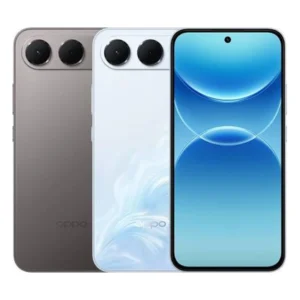
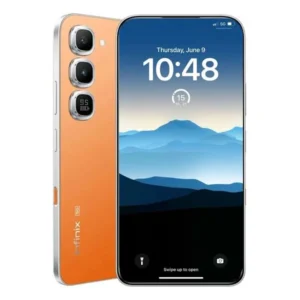
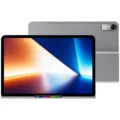
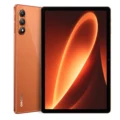
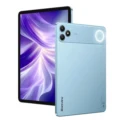
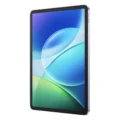
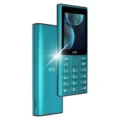
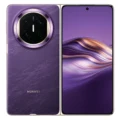
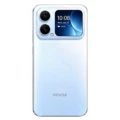
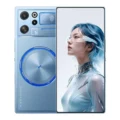
2026, November
2026, Q4 (Regional Rollout November 2026) —
Status≠Differs
Available. Released 2026, November (South Asia / Global Rollout)
Available. Released 2026, November —
BODY
Dimensions≠Differs
159.08 x 75.81 x 8.80 mm (6.26 x 2.98 x 0.35 in)
165.8 x 76.4 x 6.8 mm (6.53 x 3.01 x 0.27 in) —
Weight≠Differs
205 g (7.23 oz)
188 g (6.63 oz) —
Build≠Differs
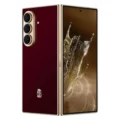
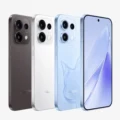
Reinforced glass front, textured wave-finish composite back, 360-degree Armour Body shock-resistant frame
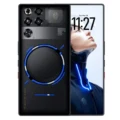
Glass front, matte composite back with rear Active Matrix Cube Dot-LED notification block, slim flat frame —
SIMsSIM (Subscriber Identity Module) is a small card that contains mobile network subscriber's account information. This allows the phone using the card to attach to a mobile network. The SIM card is most commonly associated with GSM and UMTS mobile networks. Moving a SIM card from one phone to another allows a subscriber to switch mobile phones without having to contact their mobile network carrier. SIM cards can also be used by a phone to store limited amounts of data, such as phone numbers and text messages.≠Differs
Display TypeDisplay Technology => A number of display technologies and types used in mobile phones => TFT (Thin Film Transistor), IPS (In-Place Switching), OLED (Organic Light Emitting Diode), AMOLED (Active-Matrix Organic Light-Emitting Diode), Super AMOLED (an even advanced version of AMOLED), Resistive Touchscreen (Resistive touchscreens contain two layer of conductive material with a very small gap between them which acts as a resistance), Capacitive Touchsceen (Capacitive touchscreen technology consists of a layer of glass coated with a transparent conductor)≠Differs
1080 x 2372 pixels (~397 ppi density)
1080 x 2400 pixels, 20:9 ratio (~389 ppi density) —
ProtectionDisplay Protection => Gorilla Glass is a special alkali-aluminosilicate glass shield with exceptional damage resistance that helps protect mobile displays from scratches, drops, and bumps of everyday use, It is always better to go for a smartphone with Gorilla Glass for that added protection and peace of mind.≠Differs
Operating SystemOS => Every computer system run on a base software called Operating System (OS). Operating System controls all basic operations of the computer (such as smartphone, PDAs, tablet computers and other handheld devices). The Operating System allows the user to install and run third party applications (apps), apps are used to add new functionality to the device.≠Differs
Android 16, ColorOS 16
Android 16, XOS 16 —
ChipsetChipset is a group of integrated circuits designed to perform one or a more dedicated functions, often with real time computing constraints, Popular smartphones are equipped with more advanced embedded chipsets that can do many different tasks depending on their programming.≠Differs
CPUCPU (Central Processing Unit) mostly known as processors, CPU processes instructions in order to carry out certain functions that make your device operate properly. Processors are often described as the brain of computers, smartphones and tablets, Smartphones and tablets rely on processors to carry out their every task, Processors are an incredibly important factor in selecting any type of computing device, including your smartphone.≠Differs
Octa-core up to 2.4 GHz (2x Cortex-A76 & 6x Cortex-A55)
Octa-core (4x2.4 GHz Cortex-A78 & 4x2.0 GHz Cortex-A55) —
GPUGPU (Graphics Processing Unit) is a single-chip processor designed to rapidly manipulate and alter memory to accelerate the creation of images in a frame buffer intended for output to a display, This includes things such as lighting effects, object transformations, and 3D motion.≠Differs
Mali-G57 MC2
Mali-G610 MC2 —
MEMORY
Card SlotMemory Card Slot is a special slot for inserting a memory card. Memory cards allow you to expand the phone's built-in memory, A memory card (sometimes called a flash memory card or a storage card) is a small storage medium used to store data such as text, pictures, audio, and video, for use on small, portable or remote computing devices such as mobile phones, mp3 players, digital cameras.≠Differs
Cameras SpecsToday’s smartphones come equipped with a very comprehensive set of camera related specifications. Our smartphone, for many of us, has become our primary camera due to it being the one we always have with us.≠Differs
50 MP, f/1.9, (wide), PDAF
2 MP, f/2.4, (monochrome)
50 MP, f/1.79, (wide), Sony IMX882, AF
Auxiliary depth/AI lens —
Video≠Differs
1080p@30/60fps
2K/1440p@30fps, 1080p@30/60fps —
Camera Features≠Differs
LED flash, HDR, panorama, Underwater photography mode
Dual-LED flash, HDR, panorama, Active Matrix LED back alerts —
SELFIE CAMERA
Cameras SpecsToday’s smartphones come equipped with a very comprehensive set of camera related specifications. Our smartphone, for many of us, has become our primary camera due to it being the one we always have with us.≠Differs
BluetoothBluetooth is a wireless communications technology for exchanging data between mobile phones, headsets, computers and other network devices over short distances without wires, Bluetooth technology was primarily designed to support simple wireless networking of personal consumer devices.
5.4, A2DP, LE
5.4, A2DP, LE —
InfraredInfrared connectivity is an old wireless technology used to connect two electronic devices. It uses a beam of infrared light to transmit information and so requires direct line of sight and operates only at close range.≠Differs
No Yes—
USB
USB Type-C 2.0, OTG
USB Type-C 2.0, OTG —
NFCNFC (Near field communication) is a set of standards for smartphones and similar devices to establish peer-to-peer radio communications with each other by touching them together or bringing them into proximity, usually no more than a few inches.
Yes Yes—
Radio
No No—
Features
SensorsSensors are electronic components that detects and responds to some type of input from the physical environment. The specific input could be light, heat, motion, moisture, pressure and location, The output is generally a signal that is converted to use in computing systems, a location sensor, such as a GPS receiver is able to detect current location of your electronic device.≠Differs
Fingerprint (under display, optical), accelerometer, gyro, proximity, compass
Fingerprint (side-mounted), accelerometer, gyro, proximity, compass, rear Active Matrix LED —
BATTERY
Battery TypeBattery Type => Cell phones run on various kinds of batteries depending on the manufacturer, phone size or shape and features. There are basically four types of cell phone batteries => Lithium Polymer, Lithium Ion, Nickel Metal Hydride and Nickel Cadmium.
Li-Ion (Lithium Ion)
Li-Ion (Lithium Ion) —
CapacityBattery Capacity is a measure (typically in Amp-hr) of the charge stored by the battery, and is determined by the mass of active material contained in the battery. The battery capacity represents the maximum amount of energy that can be extracted from the battery under certain conditions.≠Differs
8000 mAh
6000 mAh —
ChargingThe functionality responsible for recharging batteries in portable devices, such as mobile phones, significantly influences both battery lifespan and the practicality of daily product usage.The charging process, encompassing factors like voltage, current, and completion actions, is contingent upon the battery's size and type.Contemporary battery chargers dynamically adjust charging parameters based on the battery's current charging state. Charging an empty battery poses no safety risk, allowing for a quicker charging process. Consequently, many charging speed benchmarks, including ours, specify the battery level achieved after a 30-minute session on an empty battery.Standard chargers with a power output of 5V/1A, equivalent to 5W, serve as a baseline, with anything surpassing this speed classified as quick or fast charging.≠Differs
45W SUPERVOOC wired fast charging, 10W reverse wired
45W wired fast charging, 10W reverse wired, Bypass Charging —
8000 mAh multi-day IP69K endurance champ
6000 mAh slim 6.8mm endurance + Bypass Charging —
Disclaimer Note
We strive to maintain accurate and up-to-date content on our website for general information purposes only. Please refrain from using the material for business, legal, or any other decisions.